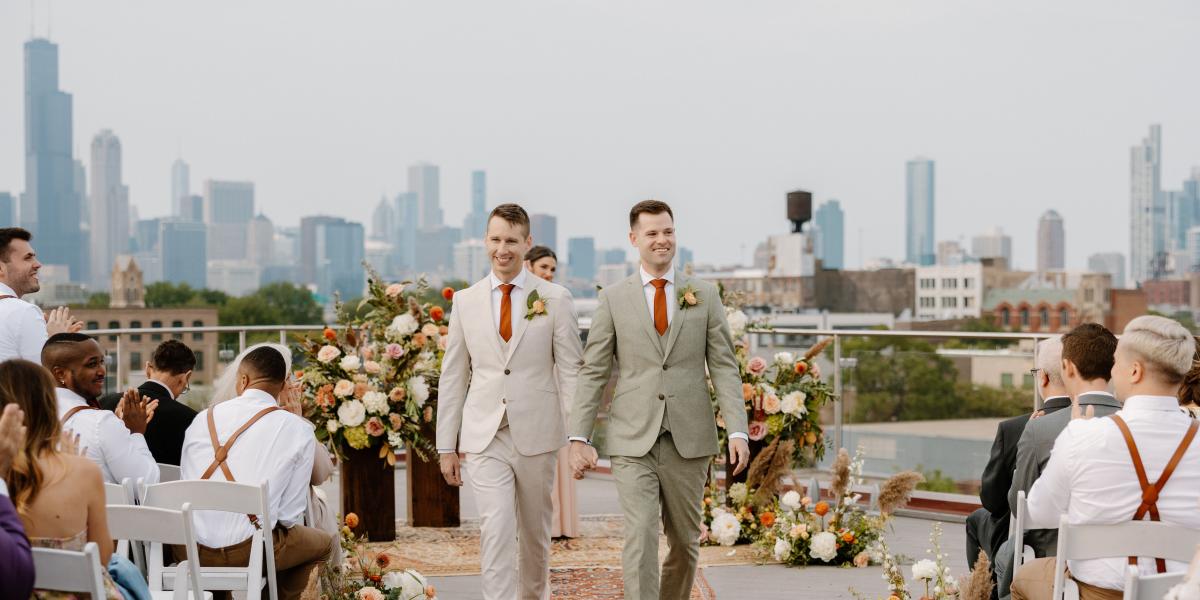
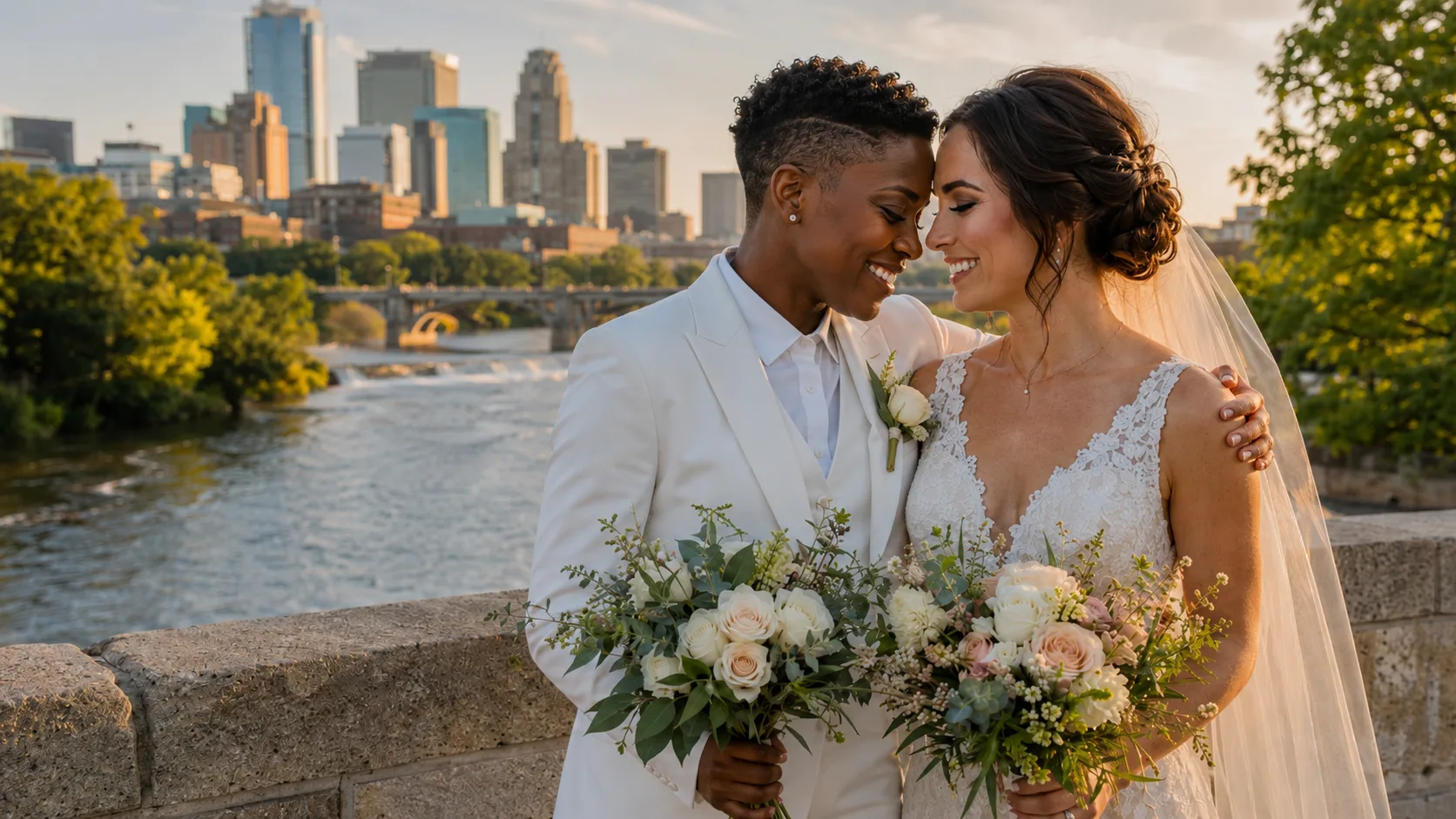
Securing Your Future: Life Insurance Options for LGBTQ+ Couples

Planning a wedding is filled with joyful decisions—venues, flowers, and all the details that bring your celebration to life. But as you build a future together, there’s another kind of planning that matters just as much: protecting the life you’re creating as a couple. In this insightful Q&A, Leo Dunn-Fox with FindMyInsurance.com shares practical, affirming guidance designed specifically for LGBTQ+ couples, helping you navigate life insurance with clarity, confidence, and peace of mind.

________________

RWN: Tell us the name of your company and a little bit about the company history and focus.

FindMyInsurance.com has been providing Term Life Insurance comparisons on the internet since 1994. We make the process of choosing and applying for life insurance easier, clearer, and more affirming—especially for LGBTQ+ couples who want guidance from someone who understands their needs. These advantages focus on what matters most when you’re protecting your partner and planning your future.

FindMyInsurance.com understands diverse family structures, including couples who are engaged, unmarried, in domestic partnerships, or planning future familybuilding. This helps avoid the awkwardness or misinformation that sometimes happens with other life insurance agents.

We are familiar with issues like beneficiary designations, adoption or surrogacy planning, and legal protection. Couples can ask sensitive questions—about gender-affirming care, HIV, or family dynamics—without fear of judgment.

The platform helps ensure your policy reflects your actual relationship, not assumptions about “traditional” families.

RWN: What kinds of insurance policies do you help people with?

FindMyInsurance.com provides information on choosing low-cost Term Life Insurance by comparing the costs, duration of needs and the financial strength of top-rated life insurance companies.

When you’re planning a wedding, choosing flowers and venues is fun... but building long-term security together matters just as much. Life insurance is one of the simplest ways for LGBTQ+ couples to protect each other, especially as you merge finances, plan a future, and create the life you want.

If one partner suddenly passed away, the other could be left with rent or mortgage payments, shared debts, or everyday bills that were once covered by two incomes. Life insurance creates a financial safety net so your partner can stay afloat during the hardest possible moment.

Whether saving for a home, planning to adopt, or building a family through IVF or surrogacy, these dreams come with real costs. Life insurance helps ensure those plans don’t disappear if life takes a tragic turn.

Funeral and end-of-life costs can be surprisingly high. A policy prevents that burden from falling on your partner or family during a time of grief. Even with marriage equality, some states and institutions still create complications around next-of-kin rights, inheritance, or family recognition. Naming each other as beneficiaries on a life insurance policy can cut through red tape and ensure your wishes are honored.

Grief takes time. Life insurance gives your partner breathing room—time to heal, time to adjust, and time to figure out next steps without rushing back to work or making drastic financial decisions.

Life insurance isn’t about expecting the worst. It’s about saying: “Your future matters to me. I want you protected no matter what.” For couples building a life together, that’s one of the most meaningful commitments you can make.

RWN: How did you get into the insurance business, and what keeps you in it today?

I have been associated with the Life Insurance Industry for about 35 years. In 1994 I was an internet pioneer when FindMyInsurance.com went online providing assistance in choosing and applying for life insurance.


RWN: What misconceptions do most people have about life insurance?

LGBTQ+ couples often have some misconceptions about life insurance. Many couples assume their identity will affect eligibility or pricing. But insurers cannot charge higher rates or deny coverage based on sexual orientation or gender identity. LGBTQ+ applicants pay the same rates as everyone else when health and lifestyle factors are comparable.

Marriage simplifies beneficiary rights, but it’s not a requirement for coverage. Unmarried couples can absolutely buy life insurance for each other as long as they show financial connection—like shared housing, debts, or future family plans. Waiting until marriage can leave a partner unprotected during a vulnerable period.

Employer-provided life insurance is usually limited—often one or two times your salary—and it disappears if you change jobs. LGBTQ+ workers, who statistically report higher financial stress and job insecurity, may be especially vulnerable if they rely solely on workplace coverage.

Many couples overestimate the cost. Research shows LGBTQ+ adults often delay buying coverage because they assume it’s unaffordable. Term life insurance, however, is typically inexpensive and can provide meaningful protection even at modest coverage levels. Starting small is far better than waiting for the “perfect” time.

While underwriting may ask about recent medical procedures or hormone therapy—just as it would for any applicant undergoing medical treatment—being transgender or receiving gender-affirming care does not disqualify someone from coverage. The key is how insurers evaluate recent medical history. Many insurers now offer coverage to people living with HIV, depending on treatment stability and overall health may qualify for life insurance. Couples who assume coverage is impossible may miss out on policies they could qualify for.

Couples may feel that they don’t have kids yet, so life insurance isn’t relevant. Life insurance protects more than children. It protects your partner’s ability to stay in your home, cover shared debts, and maintain stability during a crisis. For LGBTQ+ couples planning adoption, IVF, or surrogacy, early coverage also protects future familybuilding plans. Delaying often leads to higher premiums or complications if health changes.

RWN: If someone can only afford minimal coverage today, what’s your advice?  How do you balance affordability with adequate protection?

Starting with minimal coverage is completely valid, and for many LGBTQ+ couples, especially those planning a wedding, saving for a home, or budgeting for future familybuilding—it’s the only realistic first step. The key is understanding how to make that small policy meaningful today while keeping the door open for stronger protection later.

Even a modest policy can protect your partner from immediate financial strain. A small death benefit can cover final expenses, help with rent or mortgage payments for a few months, or prevent your partner from being forced into sudden, stressful decisions. For LGBTQ+ couples who may face legal or family complications, even minimal coverage creates a clear, legally binding expression of your wishes.

A practical approach is to focus on the risks that would hurt the most if something happened today. This keeps the policy affordable while still providing meaningful security.

Cover the essentials first. Prioritize final expenses and a few months of living costs for your partner. This creates immediate stability.

Choose term insurance. Term is the most cost-effective way to get the highest coverage for the lowest premium, which is especially helpful when budgets are tight.

Pick a term length that matches your biggest commitments. A 20 or 30year term often aligns with mortgages, career-building years, or future family plans.

Increase coverage as your finances grow. Many insurers allow you to add more coverage later without starting from scratch. As income rises or debts change, you can adjust your protection.

Avoid delaying coverage entirely. Waiting until “things calm down” often means paying more later or applying after a new medical issue appears. A small policy now is better than a perfect policy later.

RWN: What should LGBTQ+ individuals and couples know about naming beneficiaries, especially when relying on chosen family or non-traditional family structures?

With marriage, beneficiary rights are straightforward. A spouse can receive the death benefit without challenges from family members.  Domestic partnerships and civil unions offer some protections, but they vary widely by state and are not always recognized by insurers the same way marriage is. Beneficiary designations must be explicit. A partner is not automatically considered next of kin. Unmarried couples whether dating, engaged, or long-term partners can absolutely buy life insurance for each other, but they must show insurable interest, meaning your lives are financially connected.

RWN: Are there underwriting or health-related concerns—such as HIV status or gender-affirming care—that LGBTQ+ clients should be aware of when applying for life insurance?

LGBTQ+ clients do face a few underwriting and health-related considerations when applying for life insurance, especially around HIV, gender-affirming care, and how insurers classify gender. These issues don’t prevent someone from getting coverage, but they can shape timing, pricing, and the questions an insurer may ask.

RWN: What questions should LGBTQ+ consumers ask to be confident they’re working with an agent who will truly advocate for them?

These questions may help you gauge whether the agent has real experience serving LGBTQ+ clients and understands the unique legal and financial considerations:

**How many LGBTQ+ clients have they worked with? Experience matters because LGBTQ+ couples often navigate adoption, surrogacy, blended families, and non-traditional beneficiary structures.

**Are they familiar with how life insurance interacts with domestic partnerships, chosen family, or nonmarried beneficiaries? This tests whether they understand that not all LGBTQ+ families fit a traditional legal mold.

**Can they explain how to structure beneficiaries to avoid probate or family disputes? LGBTQ+ couples sometimes face challenges with unsupportive relatives; an agent should know how to protect your wishes.

RWN: How do you determine how much coverage someone needs?

Choosing a policy is easier when you know what you’re aiming for. A simple way to estimate your coverage is to look at the financial promises you’ve already made to each other—and the future you’re building.

Start with your income. Many couples choose coverage equal to 5–10 years of income. This gives your partner time to adjust, stay in your home, and keep your shared plans on track.

Add any debts you share. Think about your mortgage, car loans, student loans, or credit cards. Coverage should be high enough that your partner isn’t left carrying those alone.

Consider future family plans. If you’re planning to adopt, pursue IVF, or use a surrogate, those costs can be significant. Including them in your coverage helps protect the family you’re dreaming of.

Include final expenses. Funerals and endoflife costs can run into the thousands. Adding a buffer ensures your partner isn’t hit with unexpected bills during a painful time.

Think about longterm goals. If one of you wants to finish school, change careers, or take time off to grieve, a larger policy can create the breathing room to make those choices without financial pressure.

A quick rule of thumb: Coverage = (5–10 years of income) + (shared debts) + (future family plans) + (final expenses)

RWN: Can you share an example where life insurance made a significant difference for a family?

When Daniel and Marco got engaged, they were in the middle of buying their first home together. They both worked fulltime, shared the mortgage, and were saving for a future family through adoption. Their finances were tightly woven together. Two incomes supporting one shared life.

At the suggestion of a friend, they each bought a 20year term life insurance policy. It felt like a “responsible adult” step, but not something they expected to ever use. Two years later, Daniel was diagnosed with an aggressive illness and passed away unexpectedly. In the middle of overwhelming grief, the life insurance benefit became a lifeline for Marco. It allowed him to:

**Stay in their home without scrambling to cover the full mortgage alone.
**Pay off shared debts, including a car loan and credit cards they had planned to tackle together.
**Take several months off work to grieve, settle affairs, and regain emotional footing without worrying about missing paychecks.
**Part of the policy proceeds were aside for future adoption costs—something Daniel had deeply wanted.

The policy didn’t erase the loss, but it protected the life they had built and the dreams they had shared. It gave Marco stability at a moment when everything else felt unstable.

_____________________

As you move forward in planning your wedding and your future together, taking steps to protect one another is one of the most meaningful decisions you can make. Life insurance may not be the most glamorous part of wedding planning, but it’s a powerful way to ensure stability, security, and peace of mind—no matter what life brings. With the right guidance and a plan that reflects your unique relationship, you can build not just a beautiful celebration, but a strong foundation for everything that comes next.

More Information:
www.FindMyInsurance.com

Leo Dunn-Fox  /  This email address is being protected from spambots. You need JavaScript enabled to view it.

Securing Your Future: Life Insurance Options for LGBTQ+ Couples

Planning a Wedding, Buying a Home, and Moving — All at Once? Read This Before You Spiral

Getting married should feel like the center of your universe. But if you and your partner are also house hunting and packing boxes between cake tastings, it can start to feel like you’re juggling bricks while dancing in heels. For LGBTQ+ couples, that pressure often comes with added emotional logistics — ensuring safety, legal clarity, and community support across every decision. Balancing all three of these major transitions — wedding planning, home buying, and moving — is possible. But it requires coordinated timing, shared decision-making, and a willingness to let go of some expectations. If you’re in this whirlwind, here’s how to stay grounded, protect each other’s peace, and make smarter choices along the way.


Set a Shared Rhythm — Not a Perfect Timeline
Let’s get one thing straight: the real estate market does not care about your wedding date. Nor will your vendors pause to accommodate your closing delays. That’s why couples who make it through this gauntlet intact tend to reframe their timeline as a rhythm, not a rigid sequence. Instead of aiming for perfect alignment, focus on what must come first — like locking in a home before a lease ends, or preserving wedding deposits. When things do overlap, the key is breathing room. In markets where buying and selling often overlap, it helps to understand how to navigate overlapping real estate timing without blowing your emotional budget.


One Thing You Can Control: Home System Chaos
While you can’t control seller timelines or contractor flakiness, you can take appliance meltdowns off your stress list. Moving into a home with aging HVAC or finicky kitchen gear? Consider locking in coverage for those systems before the first breakdown catches you off guard. When you’re already balancing floral invoices and moving van logistics, this is worth exploring — especially if you want to avoid arguments about who forgot to check the dishwasher during inspection.


Location Isn’t Just Real Estate — It’s Identity
You’re not just looking for a good school district or a short commute. You’re looking for somewhere you can exhale. Somewhere that doesn’t just tolerate you, but embraces who you are as a couple. That’s why it’s smart to experience neighborhoods before deciding. Visit at different times of day. Talk to baristas. Walk at night. See who’s visible, who’s welcome, and how you feel in your body when you’re there. This isn’t fluff — it’s data. Emotional safety is part of your investment.


Money Talk Is Mandatory — But So Is Emotional Context
Combining wedding costs and home expenses turns every dollar into a joint decision. But it’s not just about math. When one partner is paying more for the wedding and the other is covering more of the down payment, tensions can build fast. And it gets more complex when credit scores, family contributions, or job instability enter the picture. What helps? A budget that includes emotion — one that acknowledges how each person feels about money and what stress they’re carrying in. Learning to navigate unique dual-income planning challenges early builds the kind of clarity you’ll need when bigger joint financial decisions arise down the line.


Title Ownership Isn’t Just Paperwork — It’s Protection
Right from the start, you need to know how to hold title. For LGBTQ+ couples, especially those in states with shifting legal climates, this isn’t hypothetical — it’s urgent. Whether you choose joint tenancy, tenants in common, or a trust, you need a clear plan that reflects your shared intent and safeguards both of you in the eyes of the law. If this feels like overkill while you’re just trying to pick tile samples and finalize your guest list, pause and read up on how to hold title as partners — it could save you future heartbreak.


You Don’t Have to Own Right Now — Even If Everyone Else Is
There are moments when renting — even temporarily — is not a failure, it’s strategy. Choosing to wait could give you more time to build credit, understand your market, or get through the wedding without collapsing from stress. And from a purely financial standpoint, homeownership isn’t always best in fast-moving markets or transitional moments. The goal isn’t to check every milestone box at once — it’s to build something that lasts. Your name on a deed is not the same thing as your life feeling whole.


Watch for Friction That Doesn’t Belong to You
Even now, discrimination still happens in housing — and it’s not always overt. LGBTQ+ couples may encounter coded language, stalled approvals, or mismatched offers in certain markets or with certain agents. You deserve to work with professionals who see your relationship as valid, full stop. Interview real estate agents the same way you’d vet a therapist: ask about past clients, values, and whether they’re part of any LGBTQ+ alliances. Same goes for mortgage brokers and legal professionals. If someone can’t speak plainly about protecting queer couples, keep looking.


You’re not just building a home — you’re architecting a life. And while the wedding gets the spotlight, the real magic is in how you communicate under pressure, how you share messy choices, and how you stay on the same team when timelines get tangled. No one’s path is smooth. But with shared rhythms, clarity on the big stuff, and deep respect for what each of you brings to the table, you’ll find your way through this season — and into your new home — stronger than ever.


Discover the magic of planning your dream wedding with trusted vendors at Rainbow Wedding Network, where every celebration is filled with pride and style!

Planning a Wedding, Buying a Home, and Moving — All at Once? Read This Before You Spiral

LGBTQ+ Families - Q&A with Cryos International

That rainbow path to parenthood can be one filled with a mix of variables and unknowns. But throughout the years here at RainbowWeddingNetwork, we have found countless organizations, companies and vendors who advocate enthusiastically for the LGBTQ+ community - and are committed to helping prospective parents find successful ways to grow their families. From adoption professionals to healthcare professionals, surrogacy services, doulas and more... And one of our favorite such organizations is Cryos International, a global sperm and egg donor bank. We took time recently to chat with Grant Hentges, senior development manager at Cryos, for a short Q&A to help our readers understand more about all this wonderful company has to offer.

RWN:  What are the basic resources Cryos offers?
Cryos International is a global sperm and egg donor bank. Within the reproductive health/IVF industry, we fill a very specific niche: to recruit, screen, and collect samples from sperm and egg donors of all ethnicities and phenotypes who want to help people make their dream of having a child come true.

RWN:  In what ways is Cryos different than other companies that offer similar services?
There are several important considerations when choosing a donor. These include the family medical history of the donor; the infectious and genetic testing performed on the donor; the donor’s profile, including what information is disclosed to aspiring parents and their children; and the process of ordering a donor sample and having it delivered. Cryos has tailored this process with the intended parent in mind. Our entire donor catalog is accessible via our online Donor Search, not hidden behind a paywall. Intended parents can see how many donors we have in stock, how many specimens each donor has available, what testing was performed, the donor’s family medical history, the donor’s profile, and where the donor can be shipped, all free of charge. Our website features childhood photos of the donors, audio recordings, handwritten motivation for donation letters, and many profiles feature photos of the donors as adults and Face Matching services to match intended parents with donors using facial recognition software. Our world-class Customer Care team is available to provide guidance through the ordering and shipping process in multiple languages, via phone, chat, or email. Finally, our emphasis on quality control sets us apart, with our computer-automated sperm processing system, industry-leading embryology lab equipment, and our quality guarantees for both sperm and egg purchases.

RWN:  How long has Cryos been in existence? And how long have you worked specifically with LGBTQ+ clients?
Cryos was first established over 35 years ago in Denmark. Our company’s founder, Ole Schou, has proudly worked with LGBTQ+ families during our company’s entire existence.

RWN:  Why do you think LGBTQ+ prospective parents feel comfortable working with the Cryos team?
Our philosophy is simple: we want to help people realize their dreams of having a family. Every Cryos employee is dedicated to helping build happy and healthy families, regardless of gender identity, family composition, marital status, or sexuality. Playing a small role in helping parents-to-be have babies inspires all of us!

RWN:  Do you have suggestions to help LGBTQ+ clients find medical providers who are LGBTQ+ friendly, and to find other resources to help in their journey toward building their family?
On our website, we have a blog universe featuring articles about all aspects of the family-building process, including posts about selecting a donor and real-life stories from parents of donor children. There are several organizations that can help LGBTQ+ patients navigate the process of building their families. The Society for Assisted Reproductive Technology (SART) has an interactive clinic search that can help patients select a provider based on different criteria (including LGBTQ+ programs). SART’s website also provides detailed information about clinics’ success rates and patient outcomes. There is another group, Resolve, which is an advocacy organization that works on behalf of every patient utilizing assisted reproductive technology services. Resolve has resources and support groups for every type of patient, and closely tracks changes in regulations affecting the industry. Finally, there are a few additional organizations that work with specific subgroups in the LGBTQ+ community, including Family Equality, Men Having Babies, and Gay Parents To Be, to name a few.

RWN:  Where can interested readers find specific rate information?
All pricing information can be found directly on our website. There is a pricing guide in the “How To” section of our website for sperm and egg donor costs, as well as shipping fees. In the online Donor Search, the prices for each sample are published on the Donor Profiles.

RWN:  What words of hope can you offer to any of our readers who may be thinking of growing their family in the near future?
If you’re thinking about growing your family – it’s never too early to start exploring your options! For those of us in the LGBTQ+ community, family building involves a few extra steps, so it’s smart to have an idea of what the process entails. Also, try not to get overwhelmed by thinking that you need to navigate everything on your own. There are so many passionate people in the industry whose job is specifically to help you—tap into every resource available. Most importantly, never lose hope of your dream, because having a family is one of life’s greatest joys!

____________

For more information, please visit Cryos International online, or reach out to This email address is being protected from spambots. You need JavaScript enabled to view it.


LGBTQ+ Families - Q&A with Cryos International